An aquarium overflow moves water from the display aquarium into a sump or filtration system. Choosing the right overflow is important because it affects surface skimming, drain capacity, plumbing, noise, installation space, and the overall appearance of the aquarium.
The best aquarium overflow should provide reliable drainage, effective surface skimming, emergency protection, easy maintenance, and a low-profile design that does not take over the display.
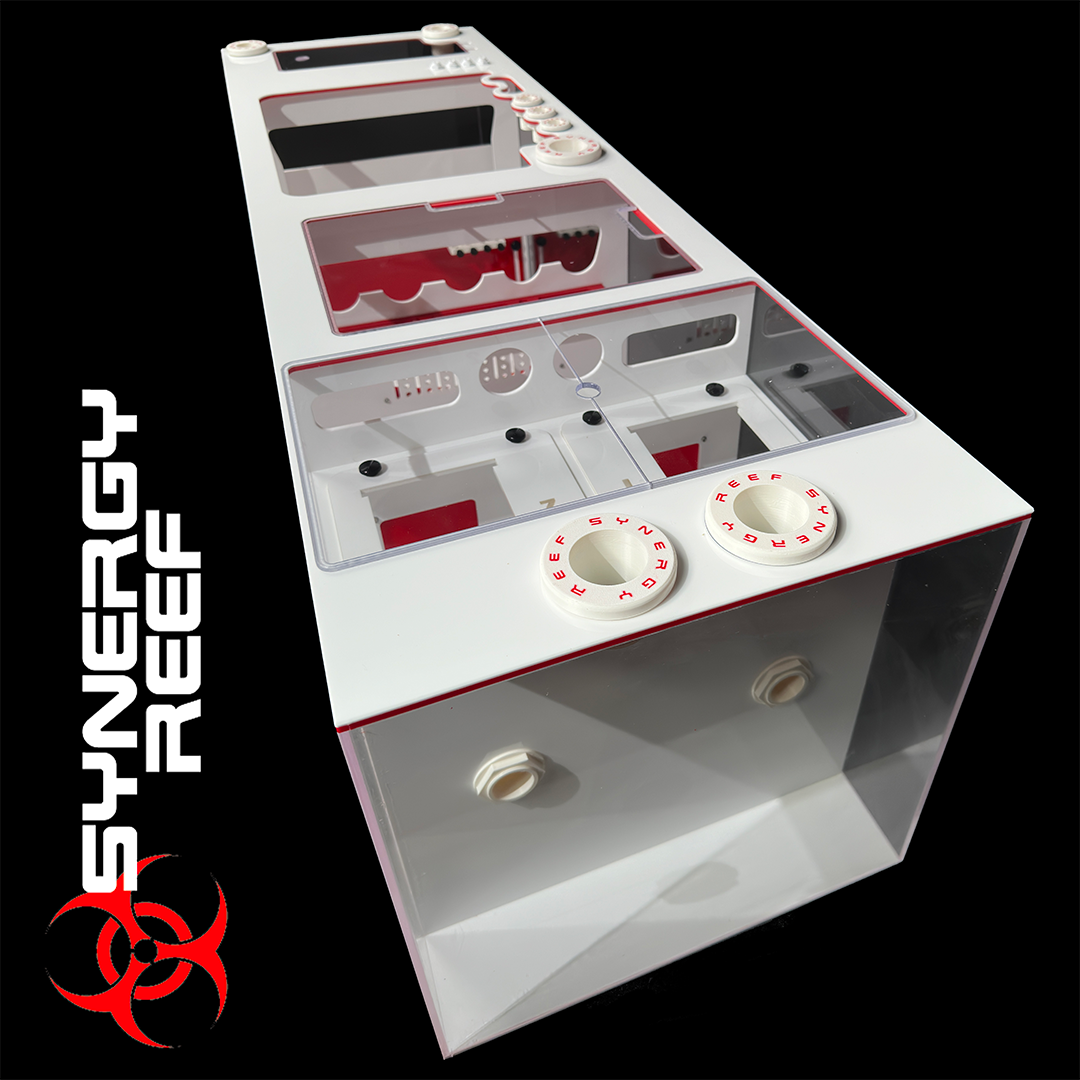
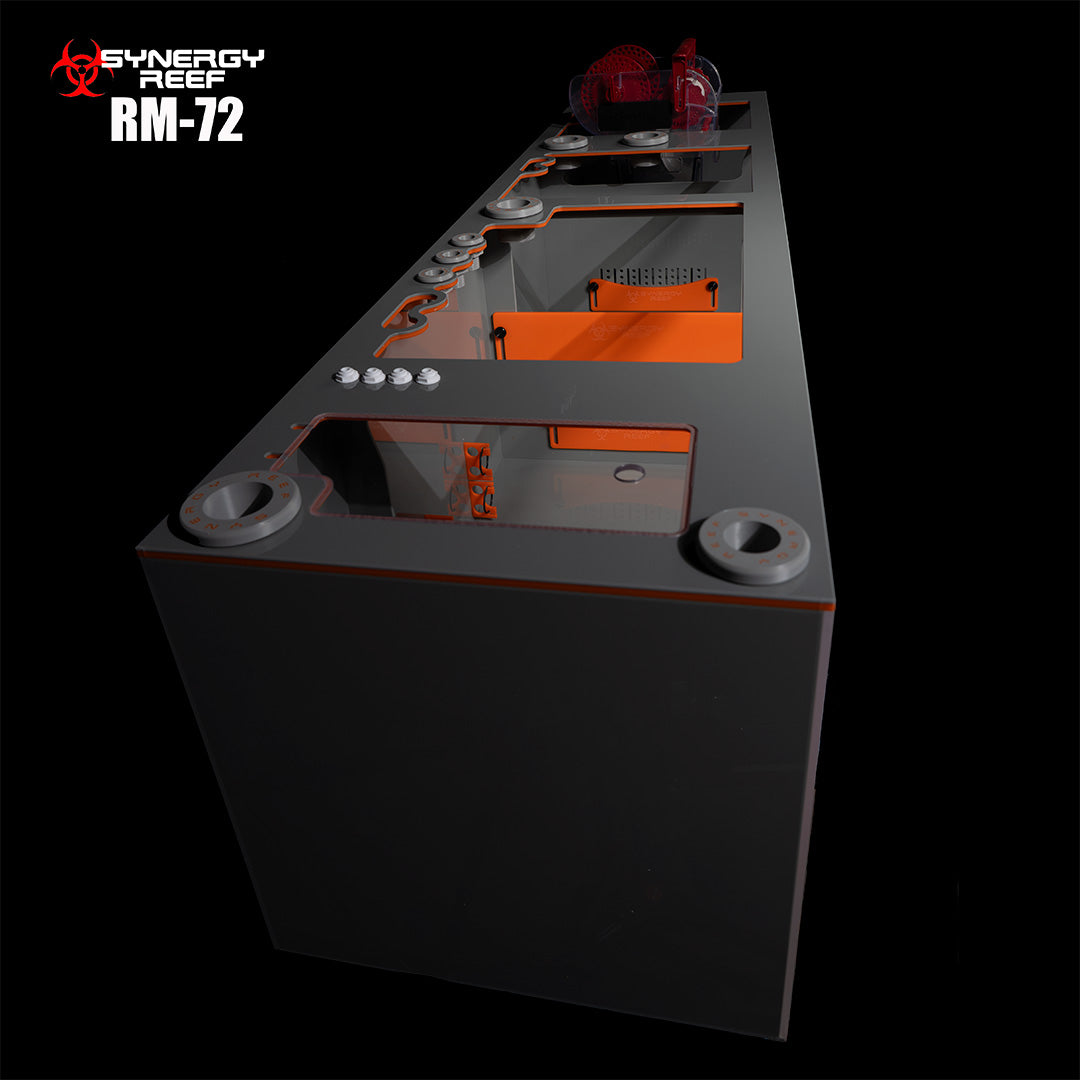
The Synergy Reef® Shadow® Overflow was designed around these priorities. Its slim internal weir, external drain box, and multi-drain configuration make it an excellent choice for reef aquarium owners who want dependable performance without a large internal overflow tower.
Why Choose the Shadow® Overflow?
The Shadow® Overflow combines strong surface skimming, a compact internal footprint, and a flexible three-drain design in one streamlined system.
- Low-profile internal weir preserves display space
- External drain box keeps most plumbing outside the aquarium
- Three drain connections support quiet and redundant plumbing configurations
- Wide surface-skimming area helps collect water from the top of the aquarium
- Removable components provide access for cleaning and maintenance
- Clean design complements modern reef aquarium installations
- Designed by Synergy Reef, the company that helped redefine the modern external overflow
For aquarium owners comparing low-profile external overflow systems, the Shadow® Overflow offers the combination of appearance, drainage flexibility, surface skimming, and proven design that makes it one of the best aquarium overflow options for a properly planned reef system.
What Does an Aquarium Overflow Do?
Water enters the overflow through a weir near the surface of the aquarium. It then travels through the drain plumbing and into the sump. A return pump sends the filtered water back to the display.
Because the overflow draws water from the surface, it also helps remove oils, proteins, and debris that can collect along the top of the aquarium.
A properly planned overflow can provide:
- Effective surface skimming
- Reliable water movement between the aquarium and sump
- Quieter drain operation
- Emergency drainage capacity
- A cleaner and less obstructed display
Internal vs. External Aquarium Overflows
Internal Overflow Boxes
Internal overflow boxes are installed inside the display aquarium. Traditional internal overflows may extend from the bottom of the tank to the waterline.
Although these systems can work well, they may occupy valuable space, limit aquascaping options, and create a large visible structure inside the aquarium.
External and Low-Profile Overflows
A low-profile external overflow typically uses a slim internal weir connected through the aquarium wall to an external drain box.
Moving most of the overflow outside the aquarium preserves more room for rockwork, corals, and livestock while creating a cleaner appearance inside the display.
This is one of the primary advantages of the Shadow® Overflow. Only the streamlined weir is visible inside the aquarium, while the larger drain section remains behind the tank.
Determine Your Required Flow Rate
The overflow must be able to safely handle the amount of water being returned to the aquarium by the return pump.
Return-pump flow is different from total circulation inside the display. Powerheads and wave pumps may create strong movement in the aquarium without sending that water through the sump.
Actual return flow is usually lower than the pump’s advertised rating because of head pressure and plumbing resistance.
Flow can be reduced by:
- The vertical distance between the sump and aquarium
- Long plumbing runs
- Elbows, valves, and fittings
- Small pipe diameter
- Manifolds and connected equipment
Select the overflow based on the expected installed flow rate rather than aquarium volume alone.
Consider the Drain Configuration
Aquarium overflows may use one, two, or three drains. Systems with multiple drains can provide quieter operation and additional protection if one drain becomes restricted.
The Shadow® Overflow includes three drain connections. These can be configured as a primary siphon, a secondary open-channel drain, and a dedicated emergency drain.
This three-drain design is one reason the Shadow® Overflow is such a strong choice for reef aquariums. It provides more flexibility for quiet operation and adds an important emergency drainage path.
Important: Drain capacity depends on pipe size, fittings, vertical drop, restrictions, and the complete plumbing layout. The number of drains alone does not determine the safe flow capacity of an overflow.
Verify Aquarium Thickness and Drilling Compatibility
Before ordering an overflow, confirm that it is compatible with the thickness of the aquarium panel where it will be installed.
You should also verify the exact drilling pattern. Overflow brands and models may use different hole sizes, spacing, and placement.
An aquarium that was drilled for one overflow should not be assumed to fit another overflow, even when the products appear similar.
Before ordering or opening the product: Compare the existing holes with the manufacturer’s official drilling template. Contact Synergy Reef when compatibility is uncertain.
Confirm That the Aquarium Can Be Drilled
Tempered glass cannot be drilled and may shatter if drilling is attempted. Contact the aquarium manufacturer if you are uncertain whether the panel is tempered.
Glass and acrylic aquariums also require different cutting tools. Always use the correct tools, drilling template, and installation instructions for your aquarium and overflow.
Measure the Space Behind the Aquarium
External overflows require enough clearance behind the aquarium for the rear box, fittings, valves, and drain plumbing.
Before installation, measure:
- The distance between the aquarium and the wall
- The depth of the external overflow box
- The space needed for fittings and valves
- The location of stand supports and braces
- The access needed for cleaning and maintenance
An overflow may physically fit behind the aquarium but still be difficult to service if it is installed too close to a wall, canopy, or stand support.
Plan for Maintenance
Overflows should be inspected and cleaned periodically. Algae, snails, debris, and salt buildup can collect around the weir, drain openings, lids, and plumbing.
Make sure the installation allows you to:
- Remove and clean the weir
- Inspect the drain openings
- Access the external overflow box
- Remove the overflow lid
- Service valves and unions
The Shadow® Overflow is designed with removable components that make routine inspection and cleaning easier when proper access is provided during installation.
Aquarium Overflow Buying Checklist
Before selecting an aquarium overflow, confirm:
- The expected return-pump flow
- The number and size of drain lines
- The aquarium panel thickness
- The correct hole size and drilling pattern
- Whether the aquarium panel can be drilled
- The available space behind the aquarium
- The sump and plumbing layout
- Access for cleaning and maintenance
Why the Shadow® Overflow Is One of the Best Aquarium Overflows
The Synergy Reef® Shadow® Overflow was created to solve many of the problems associated with traditional aquarium overflow boxes.
Instead of placing a large tower inside the aquarium, the Shadow® Overflow uses a slim, low-profile weir that preserves valuable interior space. Its external drain box keeps plumbing organized behind the aquarium, while the three-drain layout supports quiet operation and emergency drainage.
The Shadow® Overflow is an excellent choice for reef aquarium owners who value:
- A clean, modern display
- Minimal intrusion inside the aquarium
- Wide and effective surface skimming
- Three-drain plumbing flexibility
- Quiet operation when properly installed and tuned
- Access for routine cleaning and maintenance
- A proven overflow design from an experienced aquarium manufacturer
When properly selected, installed, and configured, the Shadow® Overflow delivers the performance, appearance, and flexibility that reef aquarium owners expect from a premium external overflow system.
Choose the Synergy Reef® Shadow® Overflow
Do not settle for a bulky internal overflow or a system with limited drainage options. Choose an aquarium overflow designed to preserve your display space while providing dependable surface skimming and flexible three-drain plumbing.
Review the current specifications, drilling template, installation requirements, and available accessories before beginning your aquarium build.
View the Synergy Reef® Shadow® Overflow